
Stop Reacting to Storms. Start Designing for Them.
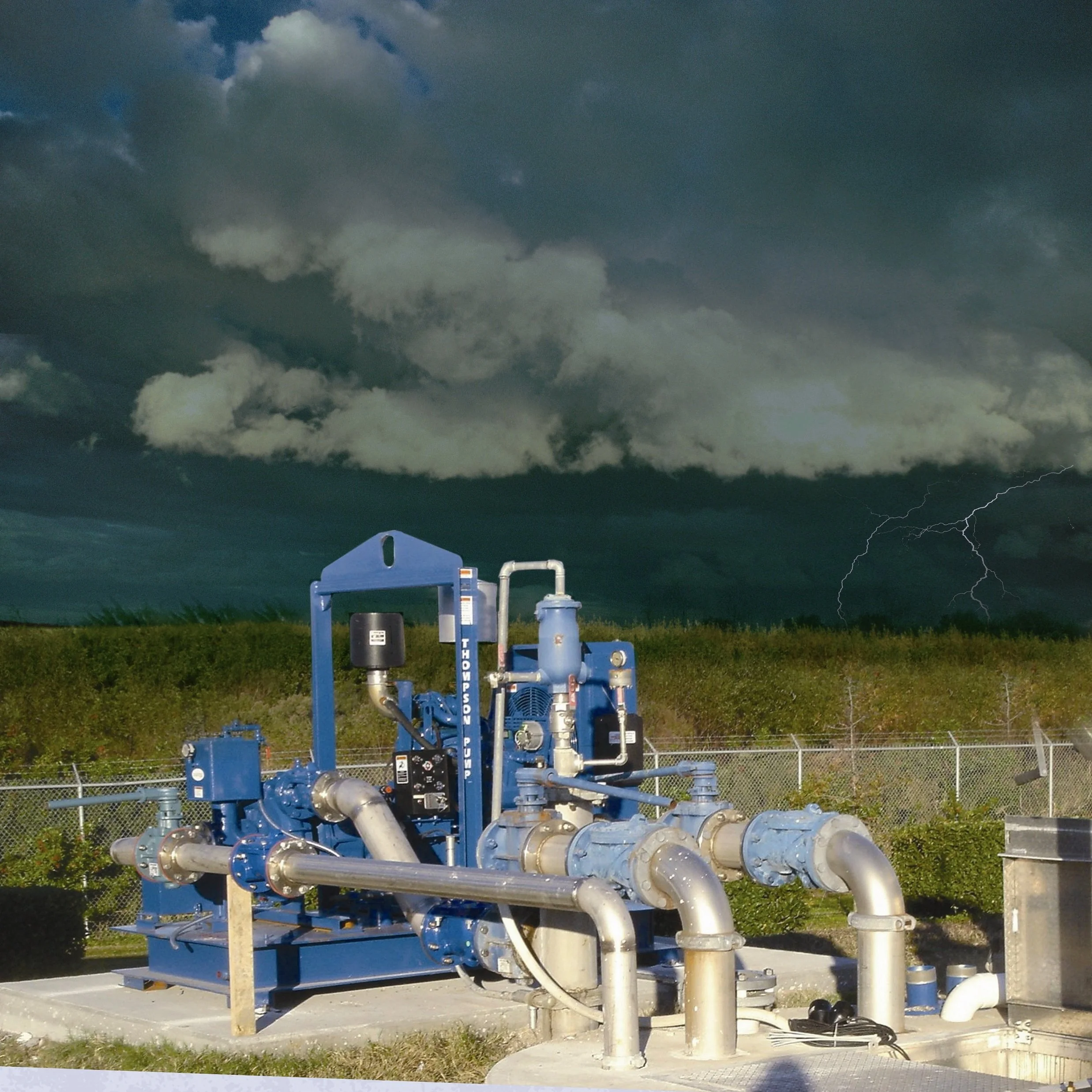
Design for the storms before they strike.
With hurricane season starting on June 1, 2026, utilities and municipalities are preparing for the strain that extreme weather places on critical infrastructure, such as lift stations. Power loss, inflow surges, and system failures can quickly escalate into environmental and public health risks if systems aren’t ready. The difference is how leading organizations respond—not reactively, but strategically.
For more than 55 years, Thompson Pump and Manufacturing Company has supported storm response efforts across the country. Today, those efforts are starting long before a storm makes landfall.
“Preparedness isn’t a checklist, it’s an infrastructure strategy.”
This shift starts with planning. Identifying high-risk lift stations, understanding system limitations, and preparing for bypass operations in advance can significantly reduce downtime when conditions deteriorate. At Thompson Pump, this philosophy is called “Pumparedness.” While the name is memorable, the approach is grounded in practical, field-tested actions that help protect infrastructure and maintain continuity during severe weather events.
Key steps include:
Inspecting and servicing pumps before peak demand
Maintaining hoses, fittings, and backup components
Clearing drains and culverts to reduce system strain
Lowering water levels to create additional capacity
Securing fuel and stocking critical spare parts early
While these measures may seem straightforward, their impact is significant. With storms growing more intense and less predictable, the question is no longer whether infrastructure will be tested, but how well it has been prepared. Organizations that are “Pumpared” today will be better positioned to maintain operations when it matters most.